
Blog
Fibre Optic Cables: A Practical Guide for Reliable High-Speed Connections
August 26, 2026
Why fibre optic cables matter
Fibre optic cables have become a core part of modern connectivity. From broadband networks and data centres to security systems, industrial automation, broadcasting, and campus infrastructure, fibre is valued for its ability to move large amounts of data quickly and reliably over distance.
Unlike copper cabling, which carries electrical signals, fibre optic cable transmits data using pulses of light. This gives fibre several practical advantages, particularly where speed, bandwidth, distance, and resistance to electrical interference are important. For businesses, installers, and technical teams, understanding the basics of fibre can make it easier to select the right cable for the job and avoid performance issues later.
How fibre optic cables work
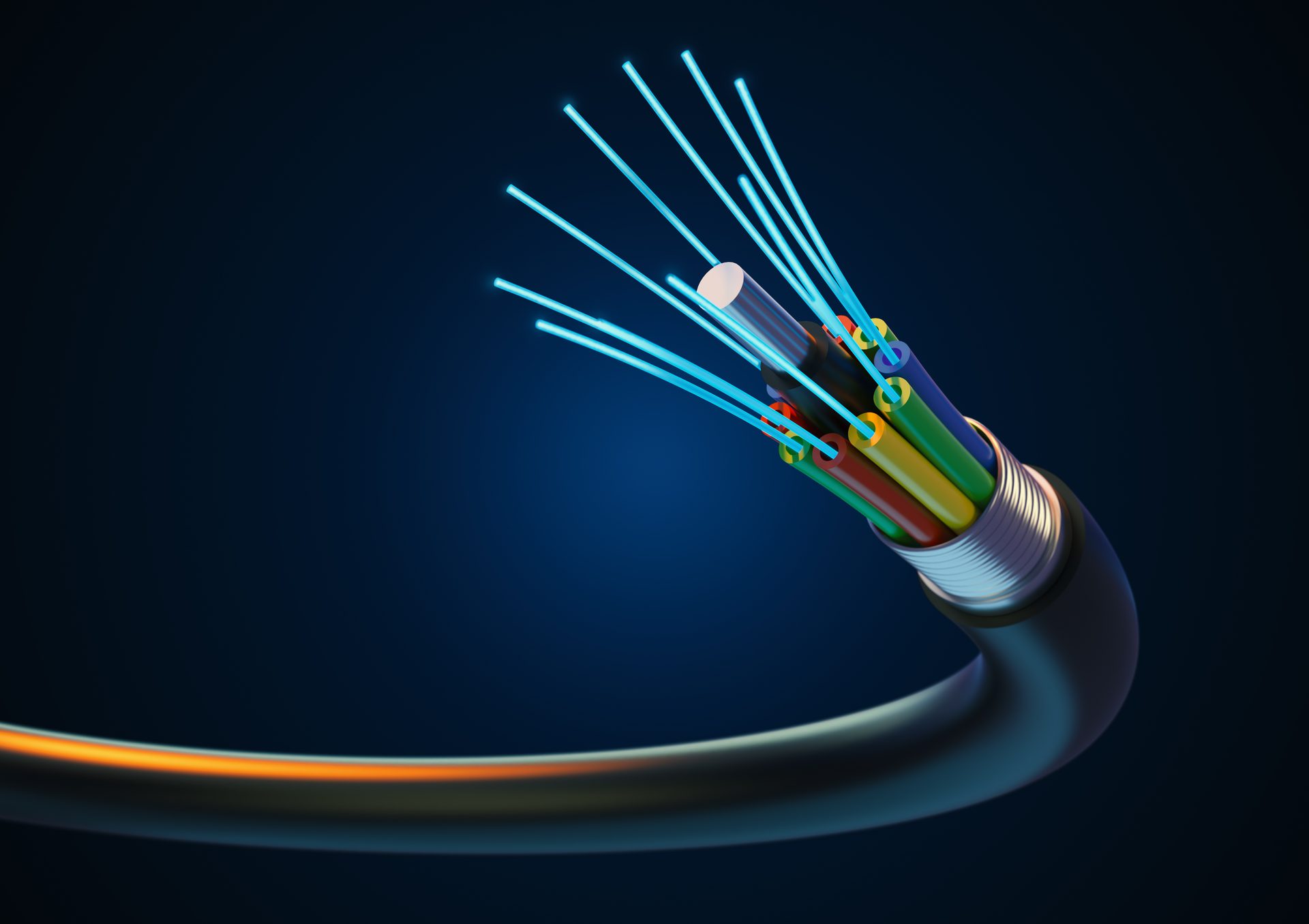
At the centre of a fibre optic cable is a very fine glass or plastic core. Light travels through this core, guided by a surrounding layer called cladding. The cladding has a different refractive index, which helps keep the light signal contained as it travels along the cable.
A fibre cable is then built up with protective coatings, strength members, and outer jackets. These layers help protect the fibre from bending, pulling, moisture, abrasion, and general handling during installation. The exact construction depends on whether the cable is intended for indoor, outdoor, underground, aerial, or harsh-environment use.
Because fibre uses light rather than electricity, it is not affected by electromagnetic interference in the same way copper cabling can be. This is particularly useful in electrically noisy environments such as factories, plant rooms, and areas with heavy machinery or high-voltage equipment.
Single-mode and multimode fibre
One of the first decisions when specifying fibre optic cable is whether single-mode or multimode fibre is required. Both are widely used, but they suit different applications.
Single-mode fibre
Single-mode fibre has a very small core and is designed to carry one main path of light. It is commonly used for long-distance links, telecommunications networks, and high-capacity infrastructure. It can support transmission over much greater distances than multimode fibre when paired with suitable equipment.
Single-mode fibre is often the preferred option when future capacity, long cable runs, or network expansion are key considerations. The cable itself is common in commercial and carrier-grade networks, although the connected optical equipment can influence the overall project cost.
Multimode fibre
Multimode fibre has a larger core that allows multiple light paths to travel through the cable. It is commonly used for shorter-distance links, such as within buildings, communications rooms, server rooms, and local network backbones.
Multimode fibre can be a practical choice for many internal installations where the required distances are moderate and compatible transceivers or media converters are already in use. Common multimode categories include OM3, OM4, and OM5, with each suited to different performance requirements.
Common uses for fibre optic cables
Fibre optic cabling is used across a wide range of sectors in New Zealand. In many cases, it is selected because it provides dependable performance where traditional copper cabling may be limited by distance, interference, or bandwidth needs.
- Business networks: linking communications rooms, floors, or buildings across a site.
- Data centres: supporting high-speed connections between switches, servers, and storage equipment.
- Security systems: carrying video and control signals over longer distances for CCTV and access control.
- Industrial sites: connecting equipment in areas where electrical noise may affect copper cables.
- Broadcast and AV: moving high-bandwidth audio and video signals with low signal degradation.
- Telecommunications: forming part of broadband, backhaul, and network infrastructure.
Key factors when choosing fibre optic cable
Choosing fibre is not only about selecting single-mode or multimode. The installation environment, connected equipment, and long-term requirements all matter. A cable that works well in a rack or cabinet may not be suitable for an outdoor trench, and a cable designed for short internal links may not be suitable for a long run between buildings.
Distance and bandwidth
Start with the required link distance and the data rate the system needs to support. Fibre performance depends on the cable type, the quality of the installation, the optical transceivers, and the connectors. If a network is likely to be upgraded in the future, it is worth considering the capacity needed beyond the immediate project.
Indoor or outdoor use
Indoor fibre cables are usually designed for protected environments such as cable trays, cabinets, and ceiling spaces. Outdoor fibre cables may need protection against moisture, UV exposure, temperature changes, and physical damage. For underground or direct-burial applications, cable construction and ducting requirements need careful attention.
Connector type
Common fibre connector types include LC, SC, ST, and MPO/MTP. The correct connector depends on the equipment being used and the design of the fibre link. LC connectors are widely used in modern networking equipment because of their compact size, while MPO/MTP connectors are often used in high-density environments.
Bend radius and handling
Fibre is durable when installed correctly, but it still needs careful handling. Tight bends, excessive pulling force, crushed cable, or poorly cleaned connectors can cause signal loss. Always follow the cable manufacturer's handling guidance and use suitable tools and installation practices.
Installation considerations
A successful fibre installation is about more than simply pulling cable from one point to another. Planning helps reduce faults, downtime, and rework. Before installation begins, confirm cable pathways, cabinet space, patch panel requirements, labelling, and the method for testing the completed link.
Cleanliness is especially important. Dust or oil on fibre connectors can lead to performance problems, even if the rest of the cable is in good condition. Connector end faces should be inspected and cleaned using appropriate fibre cleaning tools before connection.
Testing is also important. Depending on the project, this may include continuity testing, insertion loss testing, or optical time-domain reflectometer testing. These checks help confirm that the installed fibre link is performing as expected and can provide useful documentation for future maintenance.
Fibre versus copper cabling
Copper cabling still has an important place in many networks, particularly for shorter runs, power over Ethernet devices, and standard office connections. Fibre is usually selected where higher bandwidth, longer distance, electrical isolation, or interference resistance is required.
In many installations, fibre and copper work together. Fibre may provide the backbone between cabinets or buildings, while copper cabling connects end devices such as computers, phones, wireless access points, and cameras. The best approach depends on the site layout, equipment, budget, and performance requirements.
Standards and compatibility
Fibre optic systems depend on compatibility between cable, connectors, transceivers, patch panels, and network equipment. Standards help ensure that components can work together when specified and installed correctly. The International Electrotechnical Commission provides information on international electrical and electronic standards, including those relevant to optical fibre technologies.
For practical projects, it is important to check the specifications of all connected devices. The wavelength, fibre type, connector style, and supported distance must match the intended application. Mixing incompatible components can result in poor performance or no link at all.
Maintaining fibre optic connections
Once installed, fibre cabling generally requires little routine maintenance. However, good documentation and tidy cable management make a significant difference over the life of the system. Clearly labelled patch leads, organised cabinets, and protected cable routes reduce the chance of accidental damage and make future changes easier.
If a fibre link stops working or begins to perform poorly, common areas to check include dirty connectors, damaged patch leads, incorrect transceivers, excessive bends, or changes made in a cabinet. Because fibre faults are not always visible, using the right testing equipment is often the fastest way to identify the problem.
Choosing the right fibre solution
Fibre optic cables are a dependable choice for high-speed and long-distance communication, but the right solution depends on the details. Cable type, connector selection, environmental rating, installation quality, and equipment compatibility all influence performance.
For businesses and installers, taking time to plan the fibre link properly can help avoid costly changes later. Whether the requirement is a short rack-to-rack connection, a building backbone, or a more demanding industrial or outdoor installation, fibre offers a strong foundation for reliable connectivity.
Electronz supports customers looking for practical electronic and connectivity solutions. If you are planning a fibre optic cabling project, reviewing the technical requirements early will make it easier to select components that suit both current needs and future upgrades.
Posted in Blog
Find out about our fibre optic cable splicing in Morrinsville
Our services
Industrial Switchboards, Installations and Automation
We install new industrial switchboards and complete industrial electrical installations for businesses that need safe, efficient and dependable systems. We also provide automation solutions to help improve performance, reduce downtime and support smooth site operations.New House Builds
Building a new home requires an electrician who understands planning, timing and quality workmanship. ElectroNZ provides complete electrical services for new house builds in Morrinsville, from rough-in wiring through to fit-off and final completion.New Cow Sheds
We provide electrical services for new cow sheds, helping farmers create practical, durable and efficient systems for daily operation. As an experienced farm electrician in Morrinsville, we understand the needs of rural properties and the importance of reliable electrical infrastructure.New Chicken Sheds
ElectroNZ also carries out electrical installations for new chicken sheds and other specialist farm buildings. We work carefully to ensure each system is suitable for the intended use and built for long-term reliability.Fibre Optic Cable Splicing
Our fibre optic cable splicing service provides accurate, professional connections for projects that require strong and reliable network performance. This service is suitable for commercial, industrial and specialist cabling applications.Cable Locating Services
Before digging, trenching or starting site work, it is important to know where underground services are located. Our cable locating service helps identify existing underground cables, reducing risk and helping projects move ahead safely.Solar Installation, Maintenance and Servicing
We install, maintain and service solar power systems for homes and commercial buildings.Contact
Contact us
Talk to us now on
021 708 053or leave a message using the form below
- 5 Keith Camp Place, Morrinsville, Waikato 3372
- Mon-Fri: 8am - 5pm, with a 24/7 service
- dteague@electronz.net.nz